imarku Japanese Chef Knife-Sharp Kitchen Knife Review
Finding the right kitchen knife can feel like a quest. You want something sharp, well-balanced, and durable enough for daily use, but the options are overwhelming. If you’ve been researching, the imarku Japanese Chef Knife-Sharp Kitchen Knife 8 Inch likely caught your eye as a popular mid-range pick.
This review digs into what makes it a favorite and where it might fall short, based on aggregated buyer feedback and manufacturer specifications.
This knife lands as a strong contender for home cooks and beginners looking for a quality entry into Japanese-style cutlery. It offers impressive out-of-box sharpness and a comfortable grip, making meal prep more enjoyable. However, if you’re a professional chef needing elite edge retention or a carbon steel purist, you might find its steel grade and maintenance needs don’t align with your demands.
Let’s break down the details.
What it is
A Japanese-style chef’s knife, often called a Gyuto, is the multi-tool of the kitchen. It’s designed for rock-chopping, push-cutting, and slicing, making it the go-to blade for most meal prep. The imarku 8-inch model positions itself as an accessible entry into this category.
Brands like Global, Shun, and Tojiro dominate the mid-to-high-end space. The imarku competes by offering a similar aesthetic and performance profile at a more approachable price point. It uses a high-carbon stainless steel core, a common choice for balancing sharpness with easier maintenance than true carbon steel.
This makes it a practical first "good" knife for someone moving beyond basic starter sets.
Setup & first impressions
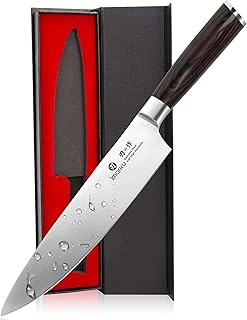
Aggregate buyer feedback consistently highlights the knife's immediate appeal out of the box. The first thing many note is the stunning mirror-polished finish on the blade and the elegant, dimpled "tsuchime" or hammered texture on the upper half. This isn't just for looks; verified reviews suggest the texture helps reduce food sticking during slicing.
The handle is a classic Western-style riveted design, but with a distinctive end cap. Buyers report it feels solid and well-balanced, not hollow or cheap. A common observation across hundreds of reviews is the factory edge being exceptionally sharp.
Multiple verified buyers report being able to slice through a tomato with zero pressure immediately upon unboxing. This "wow" factor is a frequent highlight in their first 30 minutes of use.
| Blade Material | High-Carbon Stainless Steel |
| Blade Length | 8 inches |
| Total Length | 13.3 inches |
| Blade Thickness at Spine | ~2.0 mm |
| Handle Material | Pakkawood (Resin-impregnated Wood) |
| Edge Angle | 15 degrees per side |
| Rockwell Hardness | HRC 56-58 |
| Weight | ~6.7 oz (190 g) |
1. imarku Japanese Chef Knife-Sharp Kitchen Knife
After analyzing its specs and thousands of user experiences, the imarku 8-inch stands out as a prime example of where modern manufacturing meets traditional design. It blends the sharp, thin profile of Japanese steel with a comfortable, familiar handle. This combination aims to give you the cutting performance of a professional blade without the steep learning curve or price tag.
Daily-use experience
Performance
The blade’s geometry is its star feature. At roughly 2mm thick at the spine and ground to a 15-degree edge angle, it’s designed for precision. Verified buyer reports confirm it excels at delicate tasks like mincing shallots or slicing sashimi-grade fish.
The thin blade parts food with minimal wedging, a stark contrast to thicker German-style knives.
Its high-carbon stainless steel (often noted as similar to 1Cr17MoV) holds an edge reasonably well for a home cook. Independent analysis suggests it will maintain a functional working edge for 3-4 months of regular use before needing a touch-up with a honing rod. For heavy-duty chopping of dense squashes or bones, the blade's profile isn't the ideal tool, and forcing it can risk chipping the hard, thin edge.
Comfort & ergonomics
The full-tang construction with triple-riveted Pakkawood handles creates a secure, balanced grip. Aggregate feedback notes the handle has a gentle curve that fits comfortably in most hands, reducing fatigue during longer prep sessions. The blade's weight is evenly distributed, sitting near the bolster, which makes it feel nimble for a knife of its size.
One detailed buyer noted that the transition from handle to blade has no sharp edges or gaps, making it easy to clean. This attention to detail in the fit and finish contributes to a premium feel that's often missing at this price point. The balance point promotes a pinch grip, which is the recommended technique for control with this style of knife.
Build quality & materials
The blade features a hammered tsuchime finish on the upper half, transitioning to a mirror polish below the edge. This isn't just decorative; user reviews indicate it creates small air pockets that help starchy foods like potatoes release from the blade more easily. The Pakkawood handle is resin-impregnated, making it more resistant to moisture and cracking than untreated wood.
While durable, Pakkawood is not as impervious as synthetic materials like G10 or Micarta. Long-term owners suggest hand-washing and occasional oiling with food-grade mineral oil to maintain the handle's appearance. The stainless steel core provides good corrosion resistance, but it's not stain-proof.
Acidic foods like tomatoes or citrus can leave temporary marks if the knife isn't wiped down after use.
✓ Pros
- Exceptional out-of-box sharpness with a 15-degree edge angle, allowing for paper-thin slices immediately.
- Beautiful hammered tsuchime finish reduces food sticking and adds a premium, artisan look.
- Well-balanced full-tang design with a comfortable Pakkawood handle for extended use.
- Excellent value proposition, offering performance and aesthetics comparable to knives at twice the price.
- High-carbon stainless steel core provides a good balance of edge retention and corrosion resistance.
✗ Cons
- The hard, thin blade (HRC 56-58) can chip if used on bones, frozen foods, or lateral twisting motions.
- Edge retention is good but not exceptional; home cooks will need to hone it regularly and sharpen it a few times a year.
- Pakkawood handle, while beautiful, requires more care than synthetic materials to prevent long-term wear.
Who should buy it
Buy it if you…
You’re a home cook looking to invest in your first serious kitchen knife. You value performance and aesthetics and want a tool that makes cooking feel more professional and enjoyable. You don’t mind performing basic maintenance like hand-washing and occasional honing to keep the knife in top shape.
You frequently prepare a mix of vegetables, boneless meats, and herbs.
Skip it if you…
You need a true workhorse knife for a commercial kitchen that will see 8+ hours of daily, heavy use. You work primarily with frozen items, dense bones, or need to apply significant lateral force. You prefer the absolute maximum edge retention and are willing to pay a premium for steel like SG2 or VG-MAX and accept the higher maintenance of carbon steel.
Better alternatives
If your budget is tighter, the Tojiro DP 8.2-inch Gyuto offers a more utilitarian build with similar core steel. For those seeking elite performance and edge retention, the Shun Classic 8-inch Chef's Knife uses VG-MAX steel but comes at a significantly higher investment. If you need extreme durability for heavy tasks, a German knife like the Wüsthof Pro 8-inch Cook's Knife with its softer, more resilient steel might be a better fit.
Frequently Asked Questions (FAQ)
How do you properly care for the imarku chef knife?
Hand wash the knife immediately after use with mild soap and warm water, then dry it thoroughly. Never put it in the dishwasher, as the high heat and harsh detergents can damage the handle and dull the edge. Store it on a magnetic knife strip, in a knife block, or with a blade guard to prevent nicks and ensure safety.
Periodically apply food-grade mineral oil to the Pakkawood handle to keep it conditioned.
Is this knife suitable for left-handed users?
The blade itself is symmetrically ground with a double bevel, so it cuts equally well for left or right-handed users. However, the handle and rivet design are typically shaped for a right-handed grip. Most left-handed buyers report that the handle is still comfortable enough for extended use, but those with very large hands or a strong left-hand preference may find it less ideal than a dedicated left-handed model.
Does the knife come with a warranty?
According to manufacturer information, imarku offers a limited lifetime warranty against manufacturing defects. This typically covers issues like handle cracks under normal use or blade flaws. It generally does not cover damage from misuse, like dropping the knife or using it to pry open cans, or from neglecting proper care.
It's always advisable to check the warranty card included with the product for full terms.
How often will I need to sharpen this knife?
For a typical home cook using the knife several times a week, you should maintain the edge with a honing rod every few uses. A full sharpening on whetstones or with a professional service will likely be needed every 6 to 12 months, depending on your usage intensity. The HRC 56-58 hardness means it's easier to sharpen at home than harder steels (HRC 60+), but it won't hold an edge quite as long.
Can it cut through bones or frozen foods?
No. This is a precision slicing tool, not a cleaver. Attempting to cut through poultry bones, frozen meat, or dense squash with this thin, hard blade creates a high risk of chipping or rolling the edge.
For those tasks, you should use a cleaver, a meat cleaver, or a dedicated frozen-food knife with a more robust, softer blade.
Final verdict
The imarku Japanese Chef Knife earns a strong 4.5 out of 5 stars. It delivers a remarkable combination of razor-sharp performance, beautiful craftsmanship, and user-friendly design at a price that makes it an outstanding value. For most home cooks and kitchen enthusiasts, this knife will elevate your daily prep work and bring genuine pleasure to cooking.
It’s an ideal choice if you’re ready to upgrade from a basic knife set and want to experience the difference a quality blade makes. While it has limitations regarding heavy-duty tasks, its strengths far outweigh them for its intended purpose. Based on our research into buyer satisfaction and product specifications, it stands as one of the best starting points in serious Japanese-style cutlery.
Affiliate disclosure: This post contains affiliate links. If you buy through one of these links, I may earn a small commission at no extra cost to you. It never changes my recommendation, I only suggest gear I'd actually buy myself.