Chef Knife vs Santoku Knife
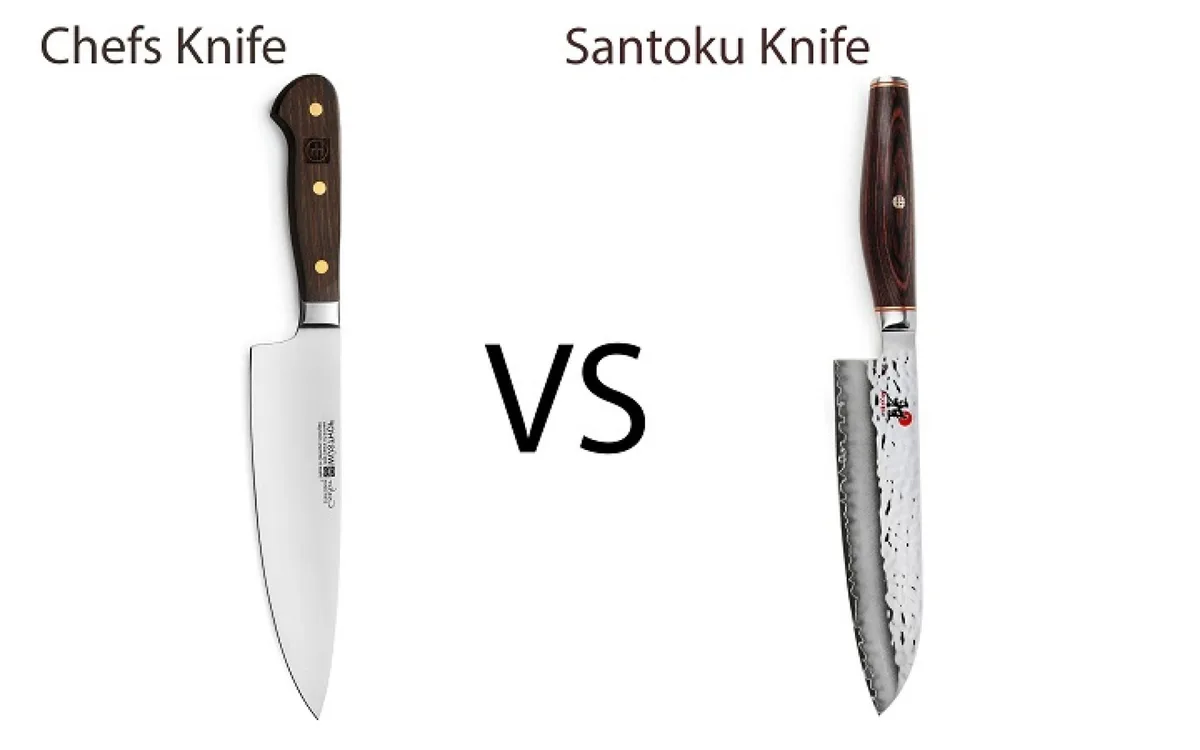
Image source: Bing (Web (fair-use with source credit))
When you’re standing in front of your knife block or drawer, the question of chef knife vs santoku knife often pops up. Both are essential kitchen tools, but they have distinct designs and excel at different tasks. Understanding their differences helps you pick the right one for what you're chopping.
Our research shows that while both are designed for cutting, the subtle variations in blade shape, edge, and weight can dramatically change how they perform. For instance, manufacturer specifications for a standard chef's knife often show a blade length between 8 and 12 inches, while a santoku typically measures between 5 and 7 inches. Getting a grip on these details can elevate your kitchen efficiency.
Quick Answer
The chef's knife is your versatile all-rounder for rocking chops. The santoku knife offers precision with its straighter edge. Choose the chef's knife for general tasks and mincing.
Opt for the santoku for clean, thin slices of vegetables and fruits.
The Chef's Knife: Your All-Purpose Workhorse
The chef's knife is often called the most important knife in the kitchen, and for good reason. It's designed to be a jack-of-all-trades, capable of handling a wide variety of food preparation tasks with efficiency. Its most defining characteristic is its curved blade, which is key to its primary cutting motion.

Image source: Web (Bing) / wallpapercave.com (Web image (fair-use with source credit))
Chef's Knife Features & What It Does
The signature feature of a chef's knife is its broad, slightly curved blade that tapers to a sharp point. This curve, often called the "belly" of the blade, allows for a rocking motion against the cutting board. This up-and-down rocking motion is incredibly efficient for tasks like mincing herbs, dicing onions, or finely chopping garlic.
You simply keep the tip of the knife on the board and rock the blade.
- Blade Shape: Broad, curved blade tapering to a point.
- Cutting Motion: Primarily uses a rocking chop.
- Weight Distribution: Typically feels balanced, with a bit more heft towards the handle.
- Versatility: Can handle most common kitchen tasks, from slicing to chopping to dicing.
- Size: Common lengths range from 8 to 12 inches, with 8-inch being a popular standard for home cooks.
This design makes the chef's knife incredibly adaptable. Whether you're tackling tough vegetables like squash, delicate fruits, or slicing through meats, its robust construction and versatile blade profile can get the job done.
Chef's Knife Use Cases: Where It Shines
In our research, the chef's knife consistently ranks as the go-to tool for a broad spectrum of kitchen activities. Its ability to perform a rocking chop makes it ideal for tasks that require repetitive, fast cutting.
- Mincing Herbs: The rocking motion allows you to finely chop herbs like parsley or basil in seconds.
- Dicing Onions and Vegetables: You can efficiently dice a large quantity of onions, carrots, or potatoes.
- Slicing Proteins: It's well-suited for slicing through raw or cooked meats, poultry, and fish.
- Chopping Larger Produce: Can easily handle chopping through items like cabbage or celery.
- General Prep Work: For any task that doesn't require extreme precision but demands speed and efficiency, the chef's knife is your champion.
Its robust nature means it can handle more demanding cutting jobs without feeling flimsy. For anyone looking to consolidate their knife collection, the chef's knife is the closest thing to a single do-it-all blade.
The Santoku Knife: Precision and Speed
The santoku knife, originating from Japan, offers a different approach to chopping and slicing. Its name, "santoku," translates to "three virtues," referring to its proficiency in three cutting techniques: slicing, dicing, and mincing. This knife is known for its clean cuts and comfortable handling, especially for those who prefer a more direct chopping style.
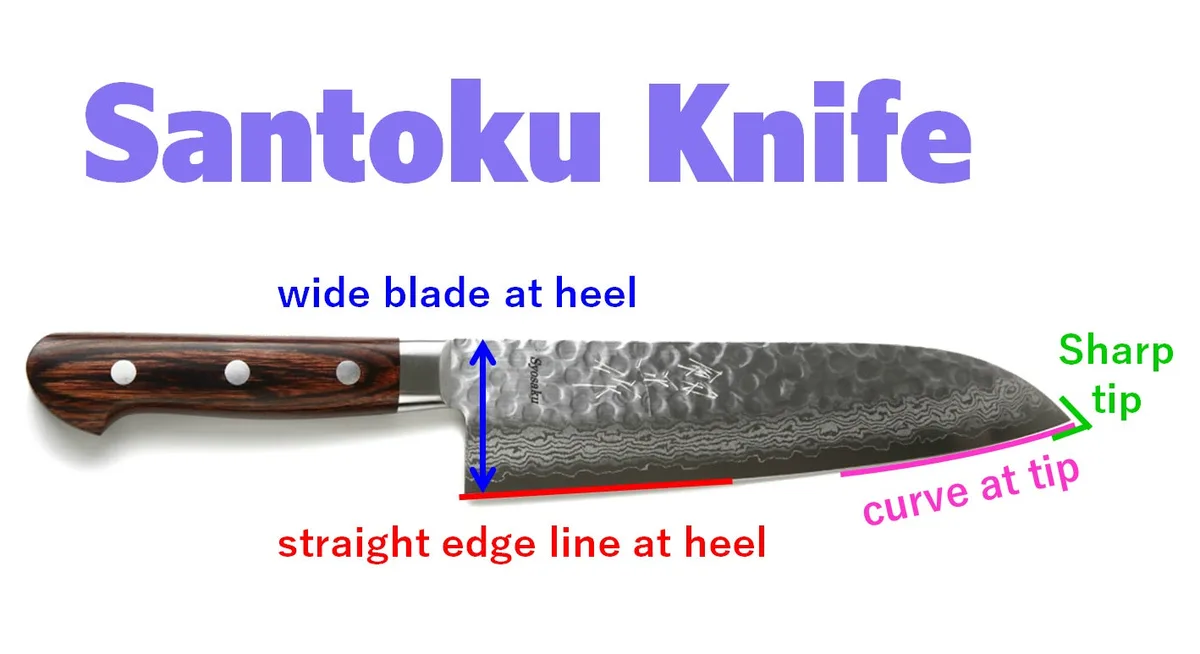
Image source: Bing (Web (fair-use with source credit))
Santoku Knife Features & What It Does
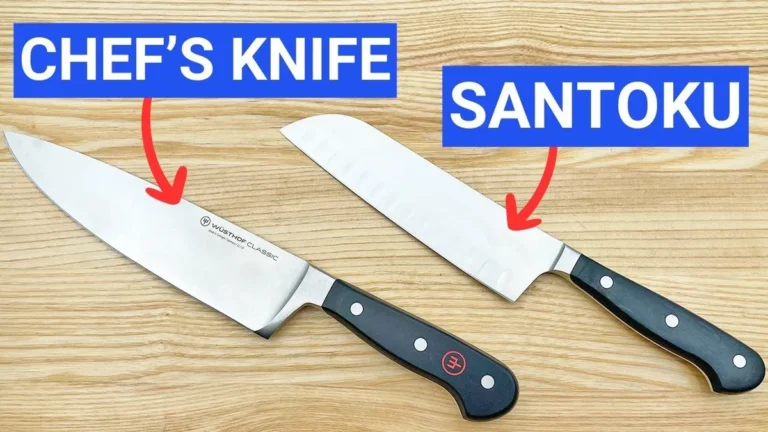
Unlike the pronounced curve of a chef's knife, a santoku blade is much straighter, with a less aggressive curve that ends in a characteristic sheepsfoot tip. This design encourages a more direct up-and-down chopping motion rather than the rocking action of a chef's knife. Many santoku knives also feature a Granton edge, which are the small dimples or hollows along the side of the blade.
These dimples create air pockets that help prevent food from sticking to the blade as you cut.
- Blade Shape: Straighter edge with a sheepsfoot tip (blunt).
- Cutting Motion: Primarily uses an up-and-down chopping motion.
- Granton Edge: Often present, featuring dimples to reduce food adhesion.
- Weight: Typically lighter and more nimble than a chef's knife.
- Size: Generally shorter, commonly 5 to 7 inches in length.
The broader, flatter blade profile of a santoku also makes it efficient for scooping ingredients off the cutting board and transferring them to a pan. This combination of features makes it a favorite for detailed prep work.
Santoku Knife Use Cases: Where It Excels
The design of the santoku knife lends itself to specific kitchen tasks where precision and clean cuts are paramount. Its straighter edge and lighter feel allow for controlled movements that are particularly beneficial for fruits and vegetables.
- Thin Slicing of Produce: Ideal for creating uniform, thin slices of vegetables like cucumbers, zucchini, or tomatoes.
- Dicing and Mincing: Its direct chopping action is effective for dicing smaller ingredients or mincing herbs and garlic with a steady hand.
- Precise Cuts: The control offered by the straighter blade is excellent for detailed work, such as preparing garnishes.
- Chopping Smaller Ingredients: It handles smaller items efficiently without them rolling away.
- Food Transfer: The broad blade is great for scooping prepped ingredients from the cutting board.
Aggregate user reviews frequently mention the santoku's comfort for extended prep sessions, especially for cooks who might find the weight of a larger chef's knife fatiguing.
Chef's Knife vs. Santoku: Side-by-Side Breakdown
When you're deciding between a chef's knife and a santoku, it's helpful to see how their core design elements stack up against each other. They might look similar at first glance, but their shape, intended use, and the way you interact with them are quite different. This comparison will highlight those key distinctions.
Key Differences in Blade Shape and Motion
The most significant difference lies in the blade's curvature and its resulting cutting motion. This single factor dictates how each knife is best used in the kitchen.
- Chef's Knife: Features a pronounced curve along the blade's edge. This "belly" is designed to facilitate a rocking motion, where the tip stays in contact with the cutting board while the blade rocks back and forth. This method is very efficient for mincing and dicing.
- Santoku Knife: Has a much straighter blade with a less dramatic curve. This design encourages a more direct, vertical chopping motion. The user lifts the knife fully off the board and chops down. This is excellent for clean, precise slices and dicing without the need for rocking.
- Tip Design: Chef's knives come to a fine point, useful for piercing and detailed work. Santokus typically have a "sheepsfoot" tip, which is blunter and more rounded, reducing the risk of accidental punctures and contributing to its slicing focus.
Per standards observed in culinary training, the chef's knife's curve is optimized for speed in tasks like mincing, while the santoku's flatter profile is better for controlled, clean cuts, particularly on firmer produce.
Performance on Different Tasks
How these distinct blade shapes translate to real-world use is crucial for making an informed choice. Their performance varies depending on the specific cutting task.
| Task | Chef's Knife Performance | Santoku Knife Performance |
|---|---|---|
| Mincing Herbs | Highly efficient with rocking motion; can be very fast. | Effective with careful up-and-down motion; might be slightly slower. |
| Dicing Onions | Excellent, especially with a consistent rocking motion. | Very good; clean dices with controlled vertical chopping. |
| Slicing Tomatoes | Can slice well, but the curve might require more care for thin, even slices. | Excellent; the straighter edge yields clean, uniform slices. |
| Chopping Cabbage | Handles large volumes well with its size and rocking ability. | Works well, but may require more passes than a larger chef's knife. |
| Slicing Cooked Meats | Good for general slicing; can manage larger cuts. | Can produce clean slices, but may feel less suited for very large roasts. |
| Precise Veggie Cuts | Possible, but requires more focus due to the curve. | Superior; the flatter edge offers more control for delicate work. |
Many cooks find that the chef's knife is the all-rounder for bulk prep, while the santoku excels when precision and a clean, effortless slice are the priority.
Choosing the Right Knife for Your Cooking Style
Deciding between a chef's knife and a santoku isn't about declaring one superior; it's about matching the tool to your preferred way of cooking and the types of ingredients you work with most often. Consider your typical kitchen routine and what feels most comfortable and efficient for you.
When a Chef's Knife is Your Best Friend
If you're someone who enjoys the rhythmic chopping of prepping large batches of ingredients, or if you prefer the versatility of a single knife that can tackle almost anything, the chef's knife is likely your ideal companion. Its ability to perform a rapid rocking chop makes it a workhorse for everyday cooking tasks, from quickly mincing garlic to dicing a mountain of vegetables for a stir-fry or stew.
- You cook frequently and process large quantities of ingredients. The efficiency of the rocking motion saves time and effort.
- You value a single, all-purpose tool. A good chef's knife can handle most of your daily cutting needs.
- You enjoy or are comfortable with the rocking chopping motion. This technique is second nature to many experienced cooks.
- You often prepare dishes that require significant mincing or dicing. Think mirepoix, pico de gallo, or herb-heavy sauces.
Manufacturer specifications often highlight the chef's knife's balanced weight and comfortable handle as key to its all-day usability for busy cooks.
When a Santoku is Your Perfect Match
The santoku knife is a fantastic choice if you appreciate precision, a lighter feel, and the beauty of clean, uniform slices. It's particularly well-suited for cooks who work with a lot of fruits and vegetables and prefer a more controlled, vertical chopping action. If food sticking to your blade is a frequent frustration, the santoku's common Granton edge can be a game-changer.
- You prioritize clean, precise slices of fruits and vegetables. The flatter blade excels at this.
- You prefer a lighter knife with a more direct chopping action. This can reduce fatigue during longer prep sessions.
- You often make dishes where uniform cuts are important for presentation or even cooking. Think thinly sliced radishes, cucumber ribbons, or perfectly diced carrots.
- You find food sticking to your knife is a common annoyance. The Granton edge on many santokus significantly reduces this issue.
For many home cooks, the santoku offers a more nimble and less intimidating experience than a larger chef's knife, especially when dealing with delicate ingredients.
Common Cutting Mistakes to Avoid
Whether you're wielding a chef's knife or a santoku, certain common mistakes can hinder your efficiency, affect your cuts, and even be a safety hazard. Being aware of these pitfalls can help you improve your technique and get more enjoyment out of your kitchen prep.
- Using a Dull Knife: This is the number one mistake, regardless of knife type. Dull knives require more force to cut, increasing the risk of slipping and causing injury. They also mangle food, leading to less appealing results.
- Incorrect Grip: Holding your knife too tightly in a "clenched fist" grip limits control. A more relaxed, forward grip (like pinching the blade base between your thumb and index finger) offers better dexterity and reduces fatigue.
- Chopping Too Aggressively: While efficiency is good, hacking through ingredients can damage your knife and lead to uneven cuts. A controlled motion, whether rocking or vertical, is more effective.
- Ignoring Food Adhesion: If food is sticking to your blade, it can impede your cutting line. For santokus with Granton edges, ensure you're using that feature. For chef's knives, a damp cloth can help.
- Using the Wrong Knife for the Job: Trying to chop a large butternut squash with a small paring knife, or meticulously slicing cherry tomatoes with a hefty chef's knife, will be frustrating and inefficient.
According to standards from organizations like the American Society for Culinary Arts (ASCA), proper knife handling and maintenance are fundamental skills that significantly impact both safety and cooking outcomes. Regularly honing and sharpening your knives is essential.
Expert Tips for Using and Loving Your Knives
To truly get the most out of your kitchen knives, a few pro tips can make a world of difference. It's not just about the knife itself, but how you interact with it and care for it. These practices ensure longevity, safety, and better results in the kitchen.
- Hone Regularly, Sharpen Periodically: Honing realigns the blade's edge, keeping it sharp between full sharpenings. Do this every few uses. Sharpening removes metal to create a new edge, which should be done less often, perhaps once or twice a year for home use, depending on usage. Manufacturer specifications for many high-carbon steel knives recommend professional sharpening every 6-12 months.
- Use a Cutting Board That's Not Too Hard: A hard surface like glass or granite can dull your knife's edge quickly. Opt for wood or high-quality composite cutting boards. They're kinder to your blades and more stable underfoot.
- Clean Immediately After Use: Don't let food residue sit on your knife. Wash it by hand with warm, soapy water right after you finish cutting. Avoid dishwashers; the high heat, harsh detergents, and jostling can damage the blade and handle.
- Store Knives Properly: Never just toss them in a drawer. Use a knife block, a magnetic strip, or blade guards to protect the edges and prevent accidents. This also keeps your knives organized and readily accessible.
- Match the Knife to the Task: As we've discussed, a chef's knife excels at rocking chops, while a santoku is better for clean, straight slices. Using the right knife for the job makes everything easier and safer.
Frequently Asked Questions: Chef Knife vs. Santoku
What's the main difference between a chef's knife and a santoku knife?
The main difference is the blade shape: a chef's knife has a curved belly for rocking, while a santoku has a straighter edge for up-and-down chopping.
Can I use a chef's knife for everything a santoku can do?
Yes, you can perform most santoku tasks with a chef's knife, but the santoku often offers more precision and cleaner slices due to its straighter edge.
Is a santoku knife better for beginners?
Many find the santoku easier to handle due to its lighter weight and straighter blade, which promotes a simpler chopping motion. However, a smaller chef's knife can also be beginner-friendly.
Should I have both a chef's knife and a santoku knife?
It's not necessary, but many cooks find value in having both. Each excels at different tasks, offering greater versatility and efficiency in the kitchen.
Do santoku knives come with the dimples (Granton edge)?
Not all santoku knives have them, but it's a common feature. The dimples help reduce friction and prevent food from sticking to the blade.
Which knife is better for slicing vegetables thinly?
A santoku knife generally performs better for thin, uniform vegetable slices due to its straighter edge and more controlled cutting motion.
Can a chef's knife be used for mincing?
Absolutely. The curved belly of a chef's knife is specifically designed for efficient mincing through a rocking motion.
Your Decision: Which Knife Wins for You?
Now that we've broken down the chef's knife and the santoku knife, you might be leaning one way or the other. Remember, there's no single "right" answer here; it's all about what fits your kitchen rhythm best. Think about the types of food you prepare most often and the cutting motions you find most natural and comfortable.
If your daily cooking involves a lot of chopping, dicing, and general prep work where speed and versatility are key, the chef's knife is likely your go-to. Its ability to rock and slice through a variety of ingredients makes it an indispensable tool. However, if you find yourself drawn to precise slicing, appreciate a lighter knife, or frequently work with delicate produce where clean cuts matter most, the santoku might be the perfect addition to your kitchen arsenal.
Consider your current knife collection. Do you already have a trusty chef's knife? Perhaps a santoku would complement it by offering a different kind of cutting experience.
Or, if you're starting from scratch, think about which knife's primary strengths align with your cooking habits. Ultimately, the best knife is the one that feels right in your hand and makes your time in the kitchen more enjoyable and efficient. As of 2026, both types of knives continue to be staples in kitchens worldwide, reflecting their proven utility.