What Angle Should You Use With a Knife Sharpener?
Figuring out what angle to use with a knife sharpener can feel like a puzzle, but it’s a critical step for getting that perfect, razor-sharp edge. Get it wrong, and you could end up with a duller knife or, worse, damage the blade. The right angle depends on your sharpener type and the knife's original bevel.
In our research, we found that most kitchen knives are sharpened at an angle between 15 and 20 degrees per side, based on common industry practices outlined by knife manufacturers. Getting this angle consistent is key, and that's where understanding your tools and techniques comes in. We'll walk you through how to nail it.
Understanding Knife Sharpener Angles
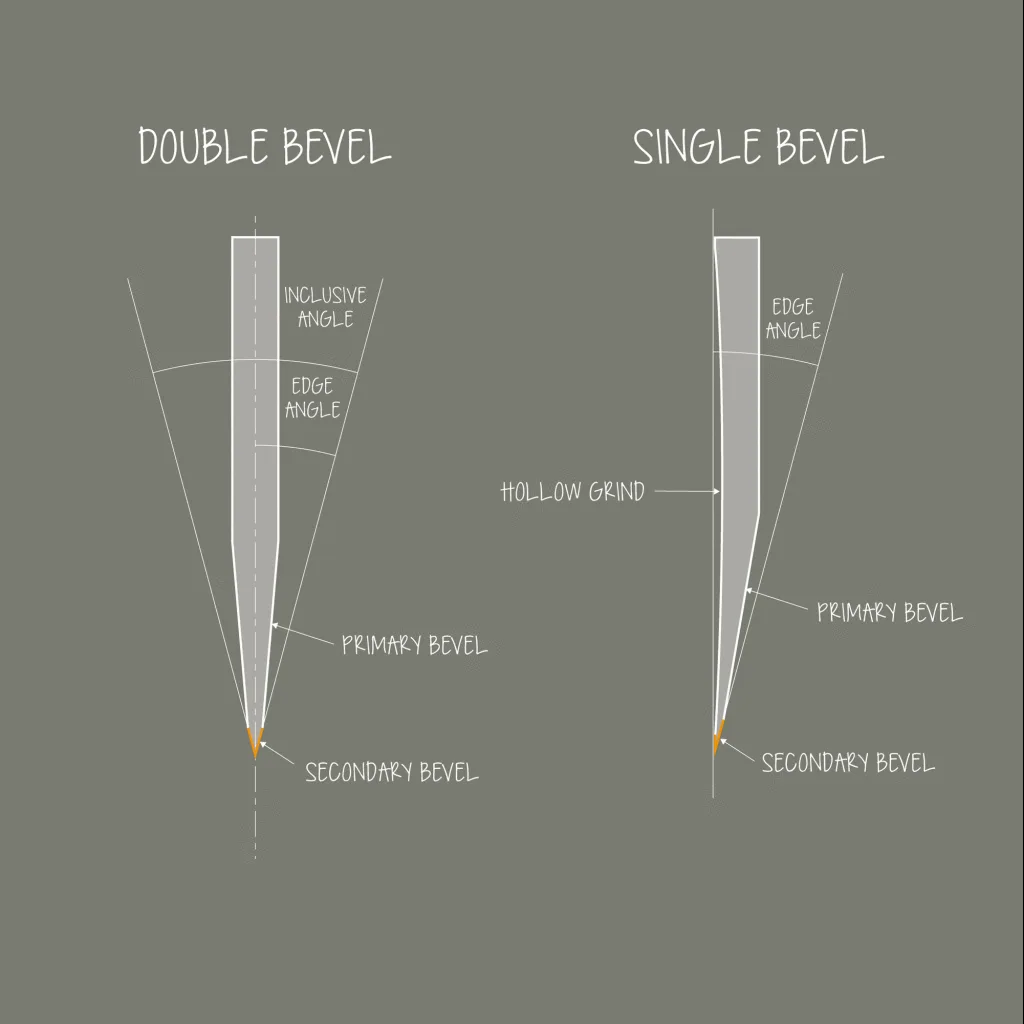
The angle at which you sharpen a knife, often called the "bevel angle," is the most crucial factor in how sharp and durable the resulting edge will be. Think of it as the point where the two sides of the blade meet to form the cutting edge. Different knives, intended uses, and sharpening tools all call for different angles.
Understanding this basic principle is the first step to achieving a truly sharp knife.
- What is a bevel angle? It's the angle formed by the intersection of the two sides of the blade at the very edge. This angle is usually measured on one side of the blade.
- Why does it matter? A sharper angle creates a finer, more delicate edge that cuts more easily, but it's also more prone to damage. A wider angle creates a more robust, durable edge that can withstand more abuse but won't be as slicing-sharp.
The goal of sharpening is to restore this bevel to its original angle or slightly refine it. Using a consistent angle throughout the sharpening process is far more important than the specific degree, especially when you're starting out.
Quick Answer
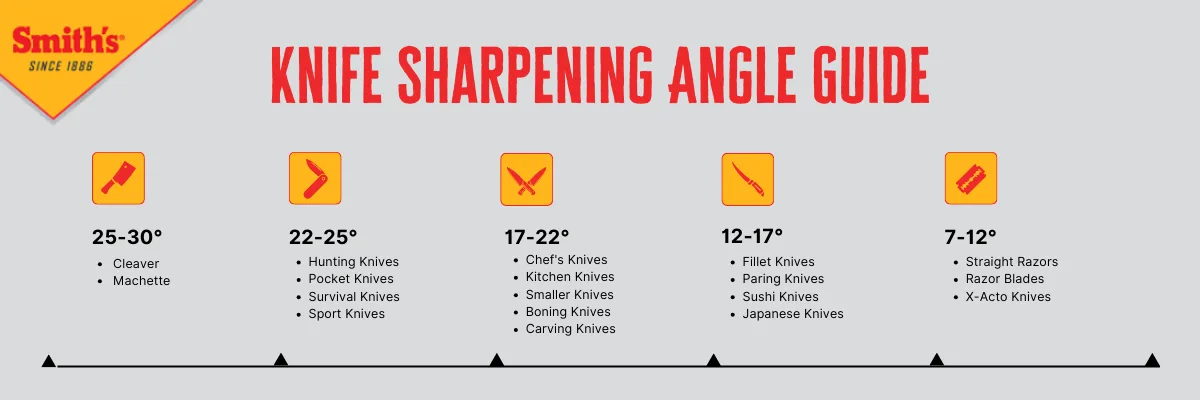
The most common angle for a kitchen knife sharpener is 15 to 20 degrees per side. Western-style knives typically use 20 degrees, while Japanese knives often use 15 degrees. For outdoor or more robust blades, consider 20-25 degrees for added durability.
The key is consistency with your chosen angle.
Common Knife Sharpener Types and Their Angles
Not all sharpeners are created equal, and many dictate the angle for you. This is a huge advantage when you're learning, as it takes the guesswork out of maintaining that precise angle.
Whetstones & Manual Sharpeners: Freehand Angles
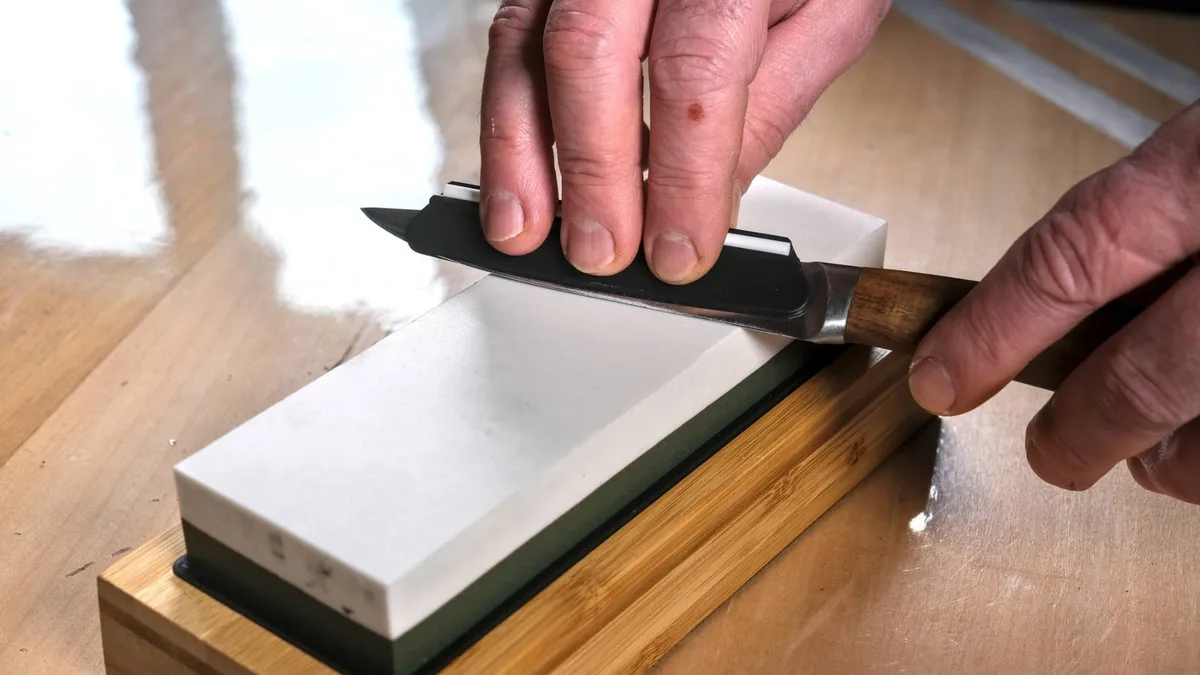
When you use a whetstone, you're sharpening freehand. This means you control the angle yourself. Most whetstones are flat surfaces, and you'll need to manually hold the knife at the desired angle against the stone as you move it.
This method offers the most control and the potential for the finest edges, but it also has the steepest learning curve for achieving a consistent angle.
- Typical Angle Control: None inherently provided. The user must maintain the angle.
- Pros: Ultimate control, can sharpen any knife, can achieve highly refined edges.
- Cons: Requires significant practice to develop muscle memory for a consistent angle.
Pull-through sharpeners, on the other hand, have pre-set slots with abrasive materials positioned at a fixed angle. You simply pull the knife blade through the slot. These are incredibly easy to use for quick touch-ups.
- Typical Angle Control: Fixed, often around 20 degrees. Some models may offer multiple slots for different angles.
- Pros: Extremely easy to use, fast, provides a consistent angle.
- Cons: Can remove too much metal with aggressive passes, may not work for all knife types or sizes, edge refinement can be limited.
Electric Sharpeners: Fixed Angle Slots
Electric knife sharpeners take the manual effort out of sharpening by using motorized abrasive wheels or belts. They usually feature guides or slots that hold the blade at a specific angle. You insert the knife and pull it through, and the motor does the work.
These are great for speed and convenience, and they reliably produce a consistent angle, typically in the 15-20 degree range, depending on the model.
- Typical Angle Control: Fixed slots, usually around 15 or 20 degrees, sometimes with multiple stages (coarse, fine).
- Pros: Fast, very easy to use, consistent angle.
- Cons: Can be aggressive and remove more metal than necessary, may not accommodate very large or small knives, limited angle adjustability on most models.
Guided Systems: Precision Angle Control
Guided sharpening systems offer a middle ground between freehand and electric sharpeners. They typically use rods or clamps to hold the knife and a guide system that ensures the sharpening stone moves at a precise, pre-set angle. Some systems allow you to adjust the angle, offering a high degree of control without the need for extensive freehand practice.
These are excellent for those who want consistent results and appreciate precision.
- Typical Angle Control: Fixed or adjustable via a mechanism, allowing for repeatable angles, often from 10 to 30 degrees.
- Pros: Excellent angle consistency, good control over the sharpening angle, great for achieving precise edges without years of practice.
- Cons: Can be slower to set up than electric sharpeners, more complex than pull-through models, some systems can be bulky.
The Ideal Angle for Different Knife Types
The "ideal" angle isn't a one-size-fits-all answer; it’s a balance between sharpness and durability tailored to the knife's intended use and construction.
Kitchen Knives: The Sweet Spot (15-20 Degrees)
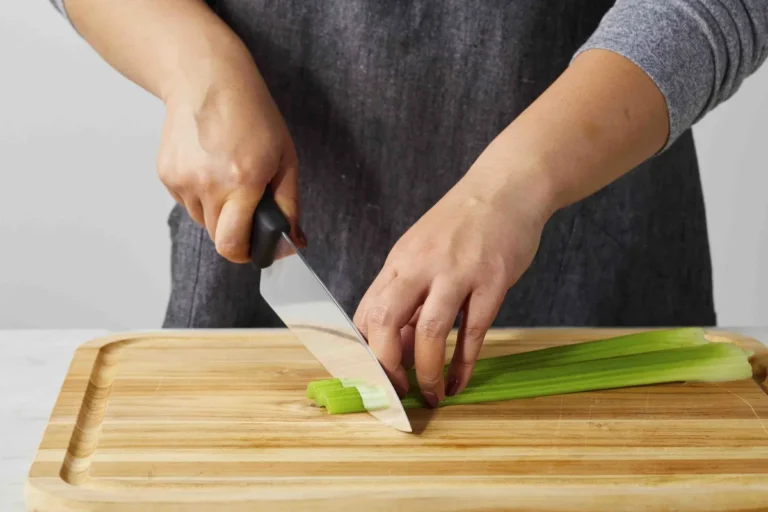
For most everyday kitchen tasks, a sharp edge that glides through tomatoes and onions with ease is the goal. This is usually achieved with an angle between 15 and 20 degrees per side.
- Japanese Knives: These knives are traditionally made from harder steel and feature a very fine, sharp edge. They are typically sharpened at a steeper, more acute angle, often around 10 to 15 degrees per side. This results in exceptional slicing ability but requires careful use to avoid chipping the delicate edge.
- Western-Style Knives: European and American kitchen knives are generally made from slightly softer steel. They are designed for more general-purpose use and can withstand a bit more stress. The standard angle for these knives is typically 17 to 20 degrees per side. This provides a good balance of sharpness and edge retention for everyday chopping, slicing, and dicing.
Many electric sharpeners and pull-through sharpeners are set to a 20-degree angle, making them suitable for most Western-style kitchen knives. If you have a Japanese knife, you might need a whetstone or a guided system that allows for the lower angle setting.
Specialty & Outdoor Knives: Durability vs. Sharpness
Beyond the kitchen, knives serve many different purposes, and their ideal sharpening angles reflect that.
- Outdoor/Survival Knives: Knives used for bushcraft, camping, or hunting often face tougher tasks like batoning wood, prying, or cutting through tough materials. For these knives, edge durability is paramount. A more robust angle, typically between 20 to 25 degrees per side, is recommended. This wider angle helps prevent the edge from chipping or rolling under heavy stress.
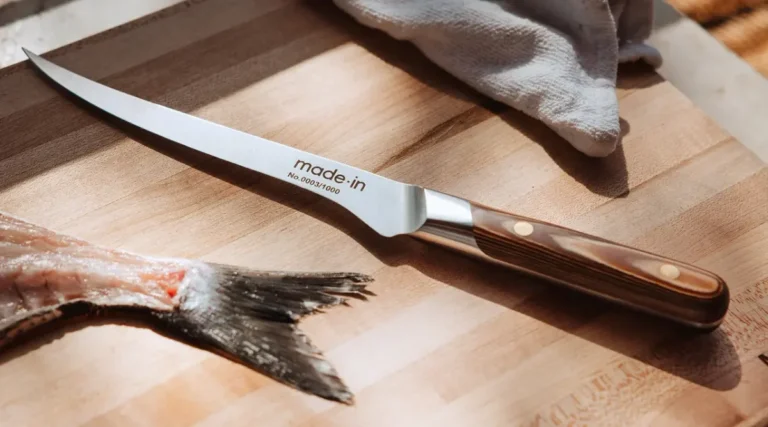
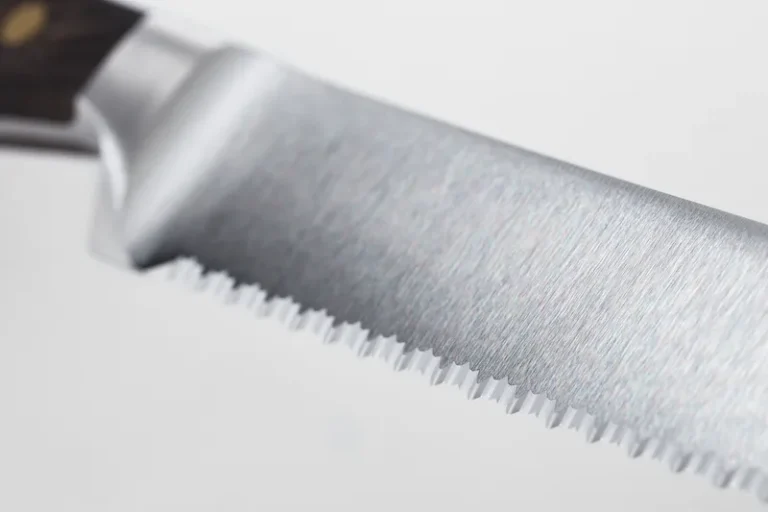
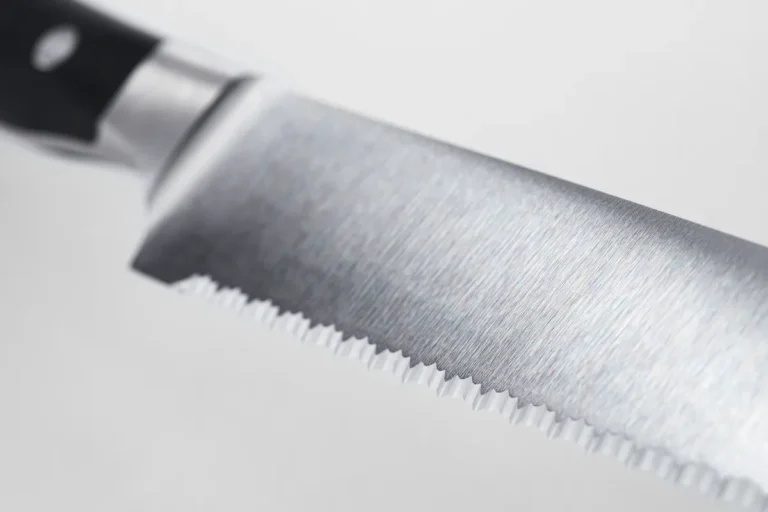
- Slicing Knives (e.g., Fillet Knives, Bread Knives): Some specialized knives prioritize extreme sharpness for specific tasks. A long, flexible fillet knife needs a very keen edge to cleanly separate meat from bone. Similarly, a serrated bread knife's effectiveness relies on its teeth. While exact angles vary greatly, the principle is that knives designed for slicing and delicate tasks often benefit from finer, sharper angles (sometimes even lower than 15 degrees for very specialized blades).
- Utility Knives/Chisels: For tools where edge durability and resistance to impact are key, angles can go up to 30 degrees per side. This provides a very strong edge that can handle rough work.
When in doubt, check the manufacturer’s recommendations for your specific knife. Many reputable knife brands provide guidance on the ideal sharpening angle for their products. For instance, official documentation from a brand like Victorinox often suggests angles around 20 degrees for their general-purpose kitchen knives.
How to Achieve the Correct Angle: Step-by-Step
Getting the angle right is arguably the most important part of sharpening. It doesn't matter how good your stones are if you can't hold the knife at a consistent angle.
Setting Up Your Sharpener
First, make sure your sharpening surface is stable. If you're using whetstones, you'll typically soak them in water (check manufacturer instructions; some are splash-and-go). Place the stone on a non-slip mat or damp cloth to prevent it from sliding around.
For guided systems, assemble them according to their instructions, ensuring any angle guides or clamps are securely in place. Electric sharpeners just need to be plugged in and placed on a stable surface.
Maintaining a Consistent Angle During Sharpening
This is where the technique comes in.
For Whetstones (Freehand):
- Identify the angle: For a 20-degree angle, imagine slicing a thin piece of cheese. You want to hold the knife edge against the stone at an angle that’s roughly a quarter of 90 degrees (90 / 4 = 22.5, so a little less than that). A common trick is to place the knife flat, then lift the spine until the edge is on the stone. Now, lift the spine an additional amount that looks about right for your target angle. Many people use the "ruler trick": place your knife on the stone, then prop up the spine with a ruler or coin that corresponds to your desired angle. For 20 degrees, this is often around 1/4 inch for a standard kitchen knife width.
- Keep your wrist locked and use your fingers to apply light, even pressure.
- Move the blade in a smooth motion across the stone, maintaining that angle. If using a long stone, move the knife from heel to tip, then tip to heel.
- Alternate sides: sharpen one side for a few strokes, then flip the knife and sharpen the other side for the same number of strokes.
For Electric Sharpeners: Simply insert the blade into the designated slot and pull it through slowly and steadily, following the manufacturer's instructions for the number of passes. The machine's guides will automatically maintain the angle.
For Guided Systems: Place the knife in the jig or clamp. Set the angle guide to your desired degree. Then, move the sharpening rod or stone along the guide, ensuring it makes full contact with the edge while maintaining the set angle.
Checking Your Progress
A simple way to check if you’re maintaining an angle is by observing the "burr." As you sharpen one side, a tiny, wire-like curl of metal (the burr) will form on the opposite side of the edge. When you start feeling a burr along the entire length of the edge on one side, you've likely sharpened that side sufficiently. Then, you flip the knife and repeat the process on the other side until you create a burr on the first side again.
This burr-making process indicates that you've met the apex.
Common Mistakes When Choosing an Angle
Getting the angle wrong is a frequent pitfall for new sharpener users. Here are the most common errors to watch out for:
- Inconsistent Angle: This is the biggest culprit. If your angle wavers during sharpening, you end up with a "rolled" or uneven edge that won't hold its sharpness. Your knife will feel dull very quickly.
- Using Too Steep an Angle for the Knife Type: Sharpening a soft steel knife at 10 degrees per side is a recipe for disaster. The edge will be incredibly sharp initially but will chip and fold over with the slightest pressure, rendering it useless. Aggregate user feedback suggests this often happens when users try to achieve a "super sharp" edge without considering the steel's hardness.
- Using Too Shallow an Angle for Durability: Conversely, taking a hard Japanese steel knife and sharpening it at 25 degrees per side might make it durable, but you'll lose that signature slicing ability. It won't feel as sharp as it could be, and you’ll struggle with delicate tasks.
- Not Checking for a Burr: Relying solely on a set number of strokes without feeling for the burr can lead to under-sharpening or over-sharpening one side. The burr is your tactile feedback that you've reached the apex on that side.
- Ignoring Manufacturer Recommendations: Many knife brands specify their preferred angle. Deviating too far without understanding why can compromise the blade's integrity or performance. For example, official documentation from Spyderco details their preferred sharpening angles for their specific steel types, which are usually in the 15-20 degree range for most of their production knives.
When to Use a Sharpening Steel vs. a Sharpener
It's easy to confuse a sharpening steel with a knife sharpener, but they serve very different purposes. Using the wrong one at the wrong time can either do nothing or actually damage your knife's edge.
A knife sharpener removes metal from the blade. Its purpose is to grind away the dull or damaged part of the edge and create a new, sharp apex. This is what you do when your knife is genuinely dull and no longer cuts efficiently.
A sharpening steel, on the other hand, does not remove significant amounts of metal. Its primary function is to realign the microscopic teeth of the blade's edge that have bent or "rolled over" during normal use. Think of it like straightening out a carpet of tiny metal fibers.
This process, called honing, restores the edge's straightness and makes it feel sharp again.
Here's a quick breakdown:
| Feature | Knife Sharpener | Sharpening Steel (Honing Steel) |
|---|---|---|
| Primary Action | Removes metal to create a new edge | Realigns the existing edge (hones) |
| Use When | Knife is dull, nicked, or has a rolled edge | Knife feels slightly dull or "draggy" but not blunt |
| Metal Removal | Significant | Minimal (microscopic) |
| Frequency | Less often (e.g., monthly, quarterly, or as needed) | Frequently (e.g., before or after each use, or daily) |
| Angle Dependency | Angle is critical for shaping the new edge | Angle is important for effective realignment |
| Common Angles | 15-25 degrees (depends on knife and tool) | Typically 15-20 degrees per side |
- Use a sharpening steel: If your knife still cuts but feels like it's "dragging" or not slicing cleanly, a few passes on a steel will likely bring it back to life. Regular honing keeps your knife performing well between full sharpenings.
- Use a knife sharpener: If honing no longer brings the edge back, or if the knife has obvious nicks or a severely rolled edge, it's time to use a sharpener to remove material and re-establish the bevel.
Challenges and Solutions in Angle Setting
Even with the best intentions, achieving and maintaining the correct angle consistently can be a challenge. This is especially true for freehand sharpening on whetstones. One common problem is uneven pressure, which can cause the angle to widen or narrow inconsistently along the blade’s length.
This results in an edge that’s not sharp across its entire span.
Another difficulty arises when sharpening knives with different bevels. If you're switching between a Japanese knife (around 15 degrees) and a Western chef's knife (around 20 degrees) during the same sharpening session, remembering to adjust your angle correctly can be tough. This is where guided systems really shine, as they simplify angle changes.
Mistakes to Avoid When Sharpening
Beyond just choosing the wrong angle, several common mistakes can lead to disappointing results or even damage your knives. One significant error is pressing too hard on the sharpening stone. Aggressive pressure can gouge the stone, damage the knife's edge by creating excessive heat, and make it harder to maintain a steady angle.
Lighter, consistent pressure is always better.
Another mistake is using the wrong grit for the task. Starting with a very fine grit on a heavily damaged or dull knife won't remove enough metal to reform the edge efficiently. Conversely, using a coarse grit for routine touch-ups can remove more metal than necessary, shortening the knife's lifespan.
Always match the grit to the condition of the edge.
When is a Knife "Too Dull" for Simple Honing?
If you find yourself spending minutes on a sharpening steel and the knife still isn't cutting well, it's likely too dull for just honing. Honing realigns an existing edge; it doesn't create a new one. When the edge is significantly rolled, nicked, or worn down, you'll need a sharpener (like a whetstone or electric unit) to grind away the damaged material and re-establish the bevel.
If a few passes on a steel don't bring back the slicing ability, it's time to reach for your sharpener.
Frequently Asked Questions About Knife Sharpening Angles
What is the most common sharpening angle for kitchen knives?
The most common sharpening angle for kitchen knives falls between 15 and 20 degrees per side. Japanese knives are often sharpened at the lower end of this range (10-15 degrees), while Western-style knives typically use the higher end (17-20 degrees).
Should I use a different angle for serrated knives?
Serrated knives are sharpened differently and often require specialized tools. Typically, you sharpen only the beveled side of each serration. The angle used depends on the knife's design but often involves a narrower angle, focusing on the individual teeth rather than the entire edge.
It’s best to use a ceramic rod or a pointed sharpening stone designed for serrated edges.
How do I know if my knife is sharp enough?
A truly sharp knife will glide effortlessly through tasks like slicing a tomato or paper. If you have to press hard or the knife tears the material instead of cutting it cleanly, it's not sharp enough. You can also perform the "paper test": hold a piece of printer paper by one edge and try to slice through it with your knife.
A sharp knife should slice smoothly with little resistance.
What's the difference between honing and sharpening?
Sharpening removes metal to create a new edge when a knife is dull. Honing, typically done with a sharpening steel, realigns the microscopic edge that has bent or rolled over during normal use. Honing maintains an already sharp edge, while sharpening restores a dull one.