Can You Use a Knife Sharpener on a Chef Knife?
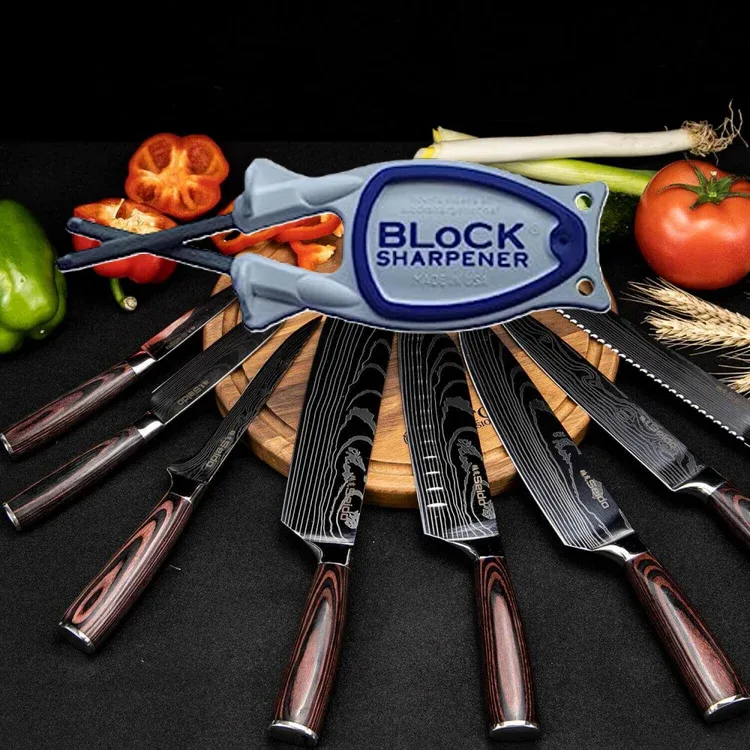
Image source: Bing (Web (fair-use with source credit))
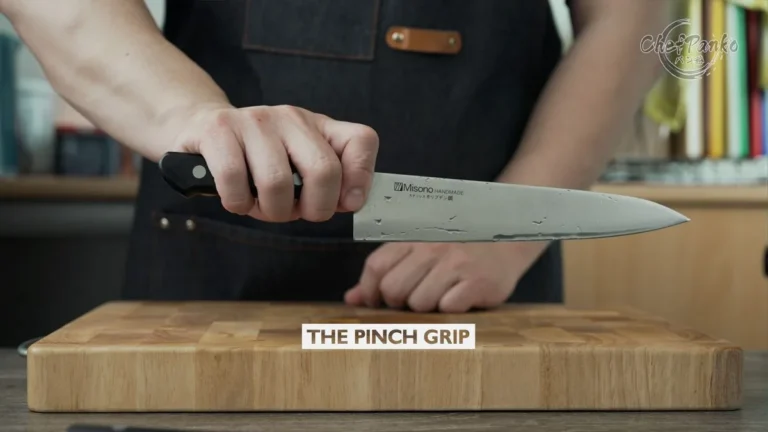
So, you've got a chef knife and a sharpener, and you're wondering if they're a match. Can you use just any knife sharpener on a chef knife? It’s a practical question that can save you from damaging a good blade or, worse, injuring yourself with a poorly sharpened tool.
Chef knives are culinary workhorses, designed for a variety of tasks, and keeping their edge keen is crucial for both efficiency and safety in the kitchen. While many sharpeners can work, not all are created equal for the specific needs of a chef knife's steel and grind, which often requires precision angle control. Manufacturer specifications for high-carbon steel blades, common in chef knives, typically recommend specific sharpening angles, often around 15 to 20 degrees per side.
Quick Answer
Yes, you can use a knife sharpener on a chef knife, but the type matters. Whetstones offer the most control and are ideal. Electric and manual pull-through sharpeners can work with caution, provided they match the knife's angle and aren't too aggressive.
Regular honing with a steel rod is crucial for maintenance.
Understanding Knife Sharpeners: What's What?
Before we talk about chef knives specifically, let's get a handle on the different kinds of tools you'll encounter for sharpening. Think of them as different levels of control and convenience. Understanding what each one does is key to picking the right one for your chef knife.
Whetstones: The Control Masters
These are flat blocks of abrasive material, often made from ceramic, stone, or diamond. You typically use them with water or oil as a lubricant. Whetstones are prized because they offer the highest level of control over the sharpening angle and the pressure applied.
This means you can precisely shape the edge of your blade.
They come in various grit levels, from coarse (for repairing a damaged edge) to very fine (for polishing and achieving a razor-sharp finish). Learning to use a whetstone takes practice, but the results are often superior. For example, a 1000-grit whetstone is great for general sharpening, while a 6000-grit stone can create a mirror polish.
Many high-carbon steel blades respond exceptionally well to the fine edge achievable with quality whetstones.

Image source: Web (Bing) / zhuanlan.zhihu.com (Web image (fair-use with source credit))
Electric Sharpeners: The Speed Demons
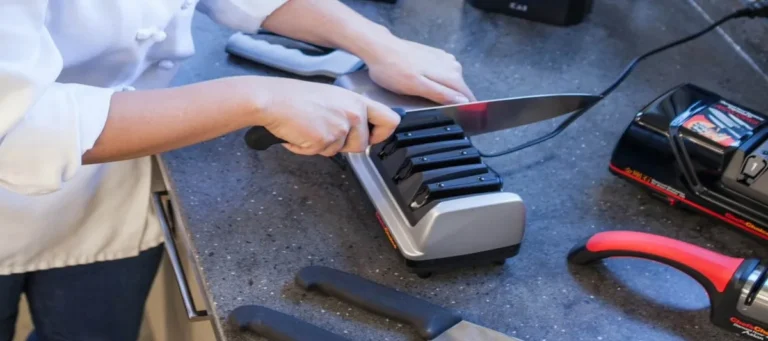
Electric sharpeners are designed for convenience. You typically pull the knife through pre-set slots, and motorized abrasive wheels do the work of sharpening. They are fast and require minimal skill to operate, making them a popular choice for busy kitchens.
However, they can be less precise than whetstones. The angle is fixed, and some models can remove a significant amount of metal, potentially shortening the lifespan of your knife if used too frequently or aggressively. Many electric sharpeners are calibrated for common kitchen knife angles, often around 20 degrees per side.
It's important to choose one that is designed for kitchen knives rather than, say, pocket knives, which might have different angle requirements.
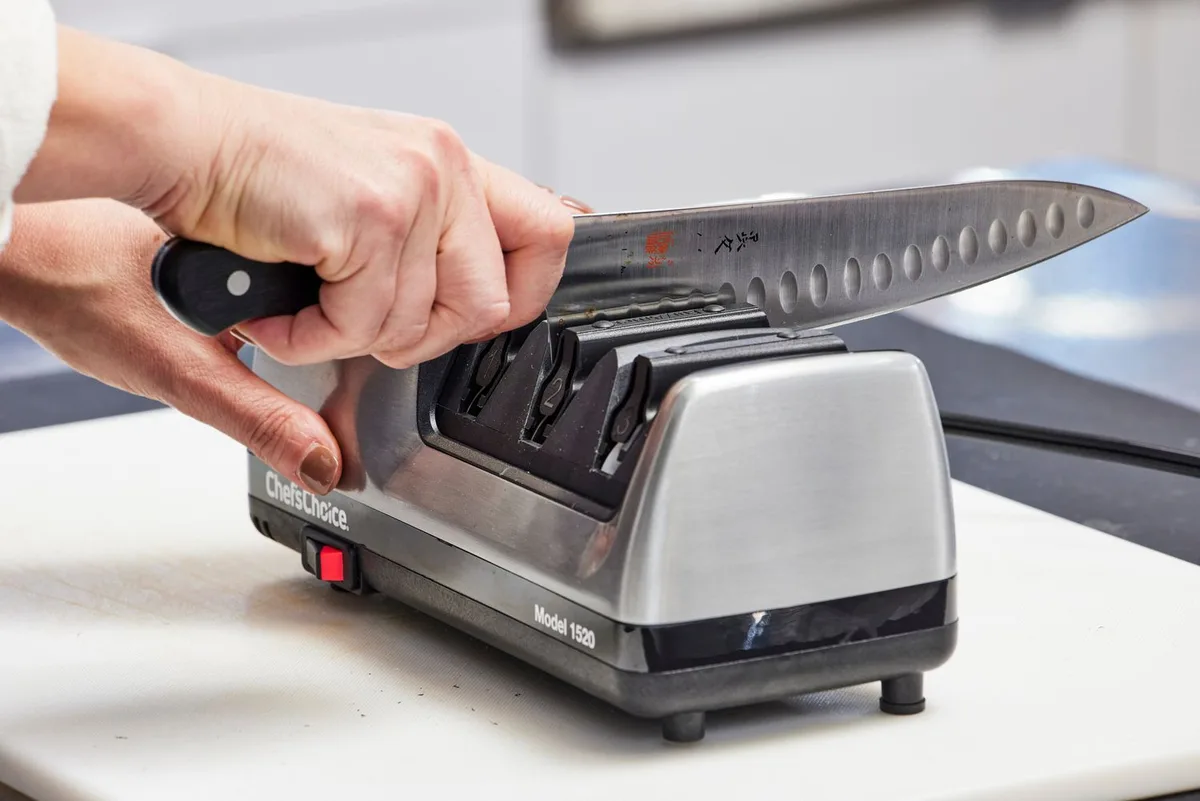
Image source: Bing (Web (fair-use with source credit))
Manual Pull-Through Sharpeners: The Quick Fixers
These are arguably the simplest type of sharpener. They consist of a base with one or more V-shaped slots lined with abrasive materials like carbide or ceramic. You simply pull the knife blade through the slots at the recommended angle.
They are incredibly easy to use and great for quick touch-ups when your knife feels a bit dull. The downside is their fixed angle and potentially aggressive abrasives, which can wear down your blade quickly and may not be ideal for all knife types. They often provide a coarser edge compared to whetstones.
Honing Rods: The Edge Maintainers
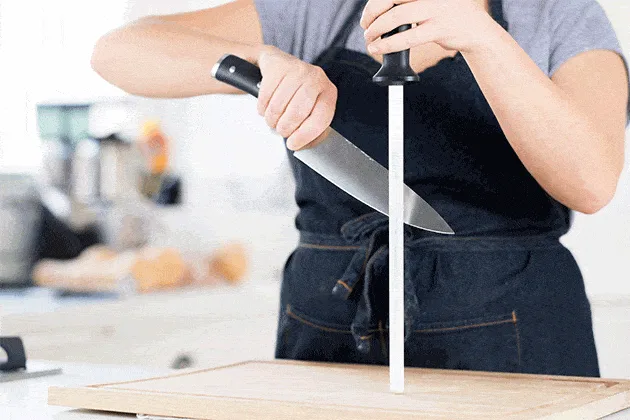
It's important to distinguish honing rods from sharpeners. A honing rod, also known as a sharpening steel, doesn't actually remove metal from the blade. Instead, it realigns the microscopic teeth along the blade's edge that get bent or fanned out during normal use.
Regular honing (using the rod every few uses) keeps the edge straight and extends the time between actual sharpening sessions. They are typically made of steel, ceramic, or diamond-coated material. Using a honing rod is a crucial part of maintaining a sharp chef knife, preventing the edge from becoming truly dull and hard to restore.
Chef Knives: Built for Performance, But How to Sharpen?
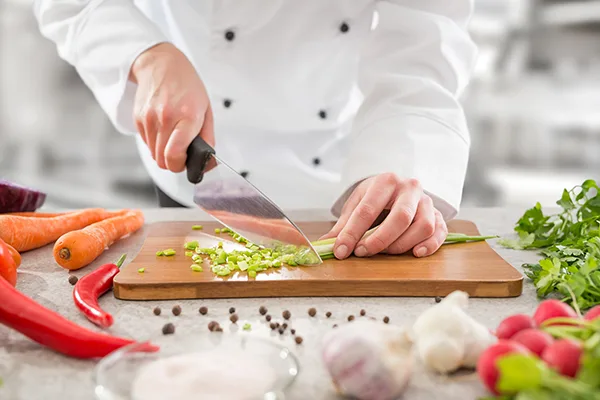
Chef knives are the backbone of any kitchen, designed for a wide range of tasks from chopping vegetables to dicing meat. Because of this versatility, they are built with specific steel alloys and edge geometries to balance sharpness, durability, and ease of maintenance. Most high-quality chef knives, especially those made from high-carbon steel or full tang designs, are intended to be sharpened to a fine, precise edge, often around 15 to 20 degrees per side, a specification you'll find detailed in many manufacturer guides.
The steel used in a chef knife is critical. Harder steels, common in premium knives, can hold a sharper edge for longer but can also be more brittle. Softer steels are more durable but may dull faster.
The way the blade is ground, its bevel, also impacts how it cuts and how it should be sharpened. A single-bevel grind (common in some Japanese knives) requires a different sharpening approach than a double-bevel grind found on most Western-style chef knives. Understanding these characteristics helps you choose the right sharpening method to preserve, not ruin, your knife's intended performance.
Matching Sharpeners to Your Chef Knife: A Practical Guide
So, can you actually use a knife sharpener on a chef knife? The answer is a resounding "yes, but choose wisely." It's not a one-size-fits-all scenario. Your chef knife is a precision instrument, and the sharpener you choose needs to respect that.
We've seen manufacturers like Zwilling J.A. Henckels and Shun provide specific guidance on maintaining their blades, emphasizing angle consistency.
The type of sharpener you pick will depend on your skill level, the type of chef knife you own, and how much time you're willing to invest. The goal is always to restore a sharp, durable edge without damaging the blade itself, which means paying attention to the abrasive grit and the angle the sharpener enforces.
When Whetstones Shine for Chef Knives
If you’re serious about keeping your chef knife in top cutting condition, a whetstone is often your best friend. These flat sharpening stones, whether water stones or oil stones, offer the most direct control over the sharpening process. This is vital because chef knives, especially those crafted from high-carbon steel, perform best with a precise and consistent edge angle, typically around 15 to 20 degrees per side, as recommended by many high-end knife manufacturers.
Whetstones allow you to achieve and maintain this specific angle meticulously. You can select different grit levels to address various needs: coarse grits (400-1000) for repairing nicks or significant dullness, medium grits (1000-3000) for general sharpening, and fine grits (3000-8000+) for creating an exceptionally keen, polished edge. This method removes minimal metal, preserving the integrity and lifespan of your valuable chef knife.
The investment in learning to use a whetstone pays dividends in blade performance and longevity.
Electric Sharpeners: Convenient, But Be Smart
Electric sharpeners offer speed and ease of use, making them an attractive option for many home cooks. They typically guide the knife through pre-set angled slots with abrasive wheels, simplifying the sharpening process. For many standard chef knives made with common steel types, an electric sharpener can restore a decent edge relatively quickly.
However, you need to be mindful of how much metal they remove. Some electric sharpeners are quite aggressive, which can wear down your blade faster than a whetstone. It's crucial to select an electric sharpener designed for kitchen knives and to check if its fixed angle aligns with your chef knife's recommended angle, typically around 15-20 degrees.
Over-reliance on an aggressive electric sharpener can shorten the lifespan of a premium chef knife. Always follow the manufacturer's instructions for your specific sharpener model.
Manual Pull-Throughs: Use With Caution on Chef Knives
Manual pull-through sharpeners are the go-to for many people seeking a quick fix for a dull knife. You simply pull the blade through fixed abrasive slots. They’re incredibly straightforward and require no special skill.
However, for a chef knife, these are generally the least recommended option for anything beyond a very occasional, light touch-up. The abrasive materials, often carbide, can be quite aggressive and may scrape or even chip the blade, especially on finely crafted chef knives with delicate edges. Furthermore, the fixed angles on these sharpeners might not match your chef knife’s specific geometry, potentially leading to an uneven or suboptimal edge.
While they can make a dull knife cut better in a pinch, they are not ideal for maintaining the health and sharpness of a quality chef knife long-term.
Honing Rods: The Edge Maintainers
It's important to distinguish honing rods from sharpeners. A honing rod, also known as a sharpening steel, doesn't actually remove metal from the blade. Instead, it realigns the microscopic teeth along the blade's edge that get bent or fanned out during normal use.
Regular honing (using the rod every few uses) keeps the edge straight and extends the time between actual sharpening sessions. They are typically made of steel, ceramic, or diamond-coated material. Using a honing rod is a crucial part of maintaining a sharp chef knife, preventing the edge from becoming truly dull and hard to restore.
Key Considerations for Your Chef Knife's Edge
When you're choosing a sharpener for your chef knife, it's not just about the tool itself; it's about understanding what makes your chef knife unique. The material and construction of the blade significantly influence how it will respond to sharpening. A quality chef knife is an investment, and using the wrong sharpening method can quickly degrade its performance and lifespan.
Blade Steel and Grind: What Matters?
Chef knives are typically made from various steel alloys, each with its own properties. High-carbon stainless steel is popular for its balance of sharpness retention and corrosion resistance. Harder steels, like those found in some Japanese knives, can hold an incredibly sharp edge but can also be more prone to chipping if sharpened incorrectly or subjected to too much force.
The grind of the blade also plays a role. Most Western-style chef knives have a double-bevel grind, meaning the edge is formed on both sides of the blade. Japanese knives often feature a more acute single-bevel grind.
Understanding your knife’s steel hardness (often measured on the Rockwell scale) and its specific grind will help you select a sharpener that won’t damage the delicate edge. For instance, a blade rated at 60 HRC on the Rockwell scale requires a different approach than one rated at 55 HRC.
Sharpening Angle: Finding the Sweet Spot
The angle at which you sharpen a knife is arguably the most critical factor in achieving a good edge. For most chef knives, a European-style knife typically benefits from an angle of around 20 degrees per side. Japanese-style knives often use a more acute angle, sometimes as low as 10 to 15 degrees per side.
Using a sharpener that enforces a consistent angle is key, especially if you're new to sharpening. Whetstones allow you to control this angle manually, but it takes practice. Electric sharpeners and manual pull-through sharpeners have fixed angles, which can be convenient but also problematic if that angle doesn't match your chef knife's factory bevel.
Using an incorrect angle can create a weak edge or even damage the blade.
Common Mistakes When Sharpening Chef Knives
Even with the right tools, it's easy to make mistakes that can harm your chef knife's edge. One of the most common errors is using too much pressure. This can generate heat, which can damage the temper of the steel, making the edge brittle or soft.
It can also lead to uneven sharpening and a compromised edge.
Another frequent mistake is an inconsistent angle. If your angle fluctuates during sharpening, you'll end up with a burr that rolls over or an edge that isn't keen. Forgetting to hone your knife regularly also leads to dullness.
Honing realigns the edge, preventing the need for heavy sharpening as often. Finally, using a sharpener that's too aggressive for your knife's steel can wear down the blade much faster than necessary, shortening its useful life considerably.
Benefits of a Properly Sharpened Chef Knife
A well-sharpened chef knife does more than just cut food; it transforms your entire cooking experience. The most immediate benefit is enhanced cutting performance. Food slides through with less resistance, meaning cleaner cuts and less bruising on delicate ingredients like herbs and tomatoes.
This precision makes cooking more enjoyable and the final dishes look more appealing.
Beyond performance, a sharp knife is also a safer knife. When you use a dull knife, you often have to apply more force to make a cut, increasing the risk of the knife slipping and causing an injury. A sharp edge bites into the food easily, giving you better control.
Finally, regular and correct sharpening, as recommended by most cutlery experts, helps to maintain the integrity and lifespan of your chef knife, protecting your investment for years to come.
Who is Each Sharpener Type Best For?
Choosing the right sharpener for your chef knife really comes down to what you prioritize and your comfort level. If you value precision and are willing to invest time in learning, whetstones are unparalleled. They offer the best control for achieving and maintaining the optimal edge angle, making them ideal for enthusiasts and professionals who own high-quality chef knives.
For those who need speed and convenience and have standard kitchen knives, electric sharpeners can be a good choice. They are quick and require minimal effort. However, it’s essential to ensure the sharpener’s angle suits your knife and that it’s not overly aggressive, to avoid excessive metal removal. Manual pull-through sharpeners are best suited for quick touch-ups on less expensive knives, or as a last resort when other options aren't available.
They are easy to use but lack the precision for maintaining a premium chef knife's edge. And remember, honing rods are for maintenance, not sharpening, and should be used regularly by everyone.
Frequently Asked Questions About Chef Knife Sharpening
Can I sharpen my chef knife with a kitchen utility sharpener?
Yes, many universal kitchen utility sharpeners can work on chef knives. However, pay close attention to the angle it sets. If it doesn't match your chef knife's intended angle, you risk damaging the edge.
How often should I sharpen my chef knife?
This depends on use, but a good rule of thumb is to sharpen when honing no longer restores a keen edge. For frequent users, this might be every few weeks. For occasional users, it could be every few months.
What grit should I use on my chef knife whetstone?
For most general sharpening, a 1000-grit whetstone is a good starting point. Use coarser grits (below 1000) for repair and finer grits (above 3000) for polishing and achieving maximum sharpness.
Can sharpening damage my chef knife?
Yes, improper sharpening can damage your chef knife. Using too much pressure, the wrong angle, or overly aggressive abrasives can weaken, chip, or wear down the blade excessively.
Is it better to sharpen or hone my chef knife?
Both are important. Honing realigns the edge and should be done frequently. Sharpening actually removes metal to create a new edge and should be done less often, only when honing isn't enough.